What is Sciton Contour TRL?
There is a difference between refreshing skin and truly resetting it. Over time, sun exposure, collagen loss, acne scarring and environmental stress change the structure of the skin itself. Fine lines become etched. Texture becomes uneven. When damage sits that deep, lighter treatments may not be enough.
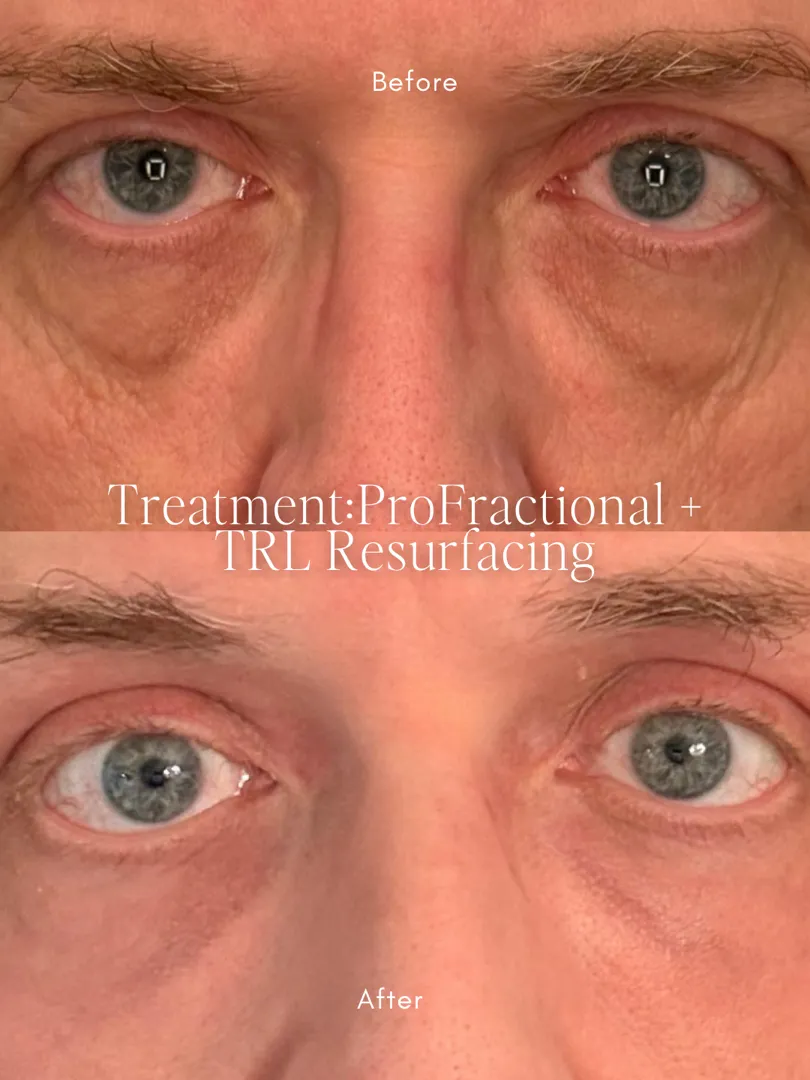
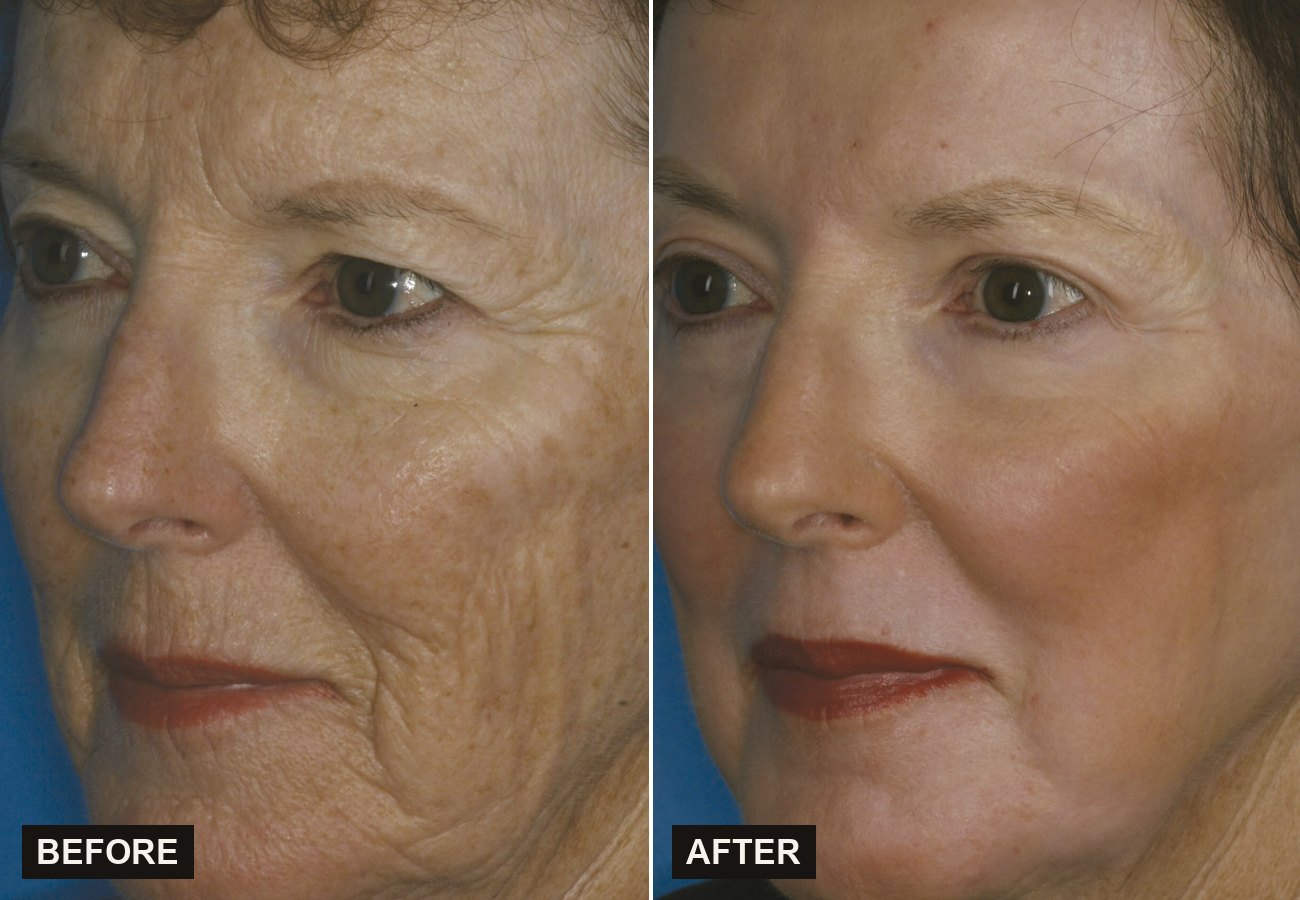
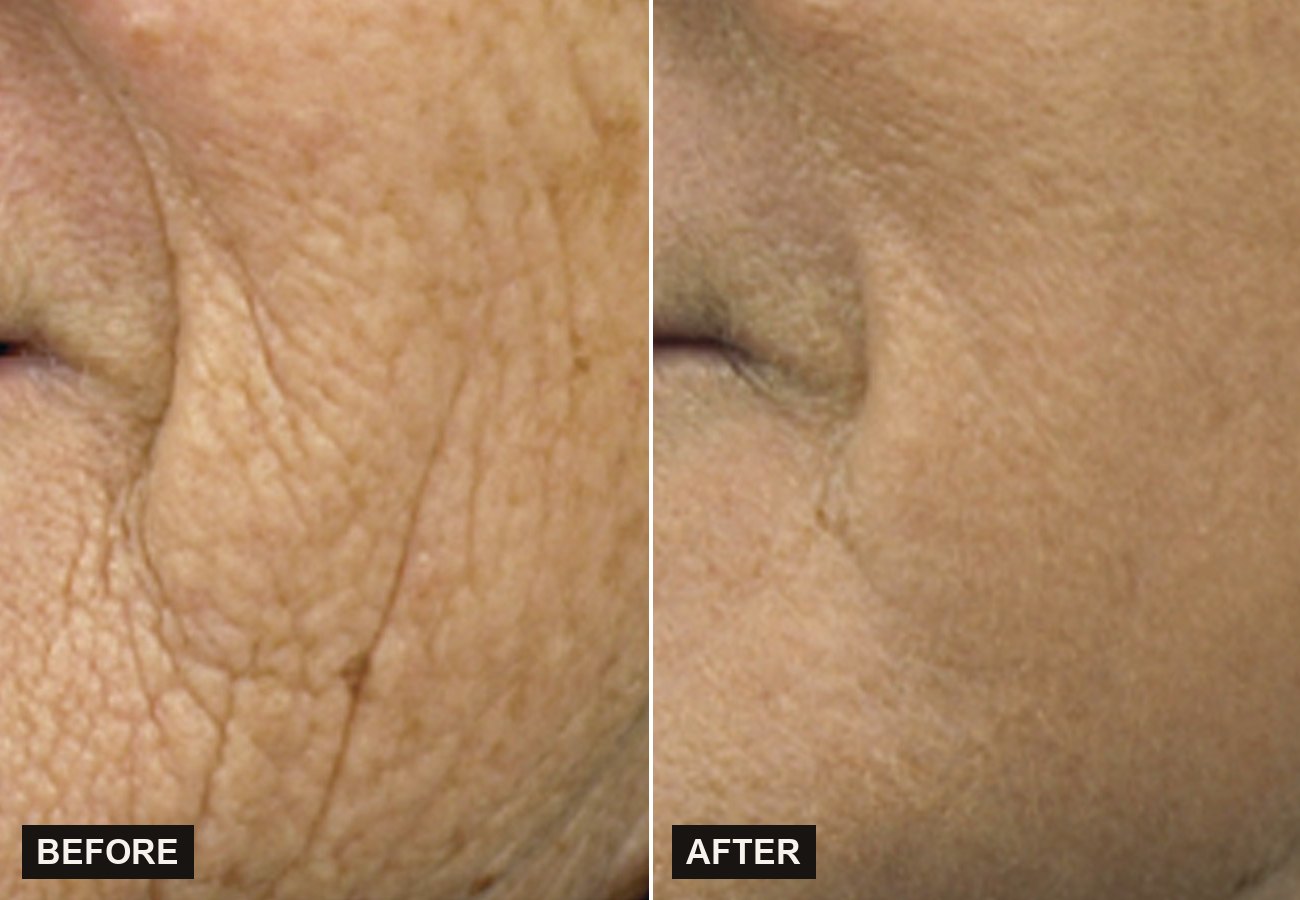
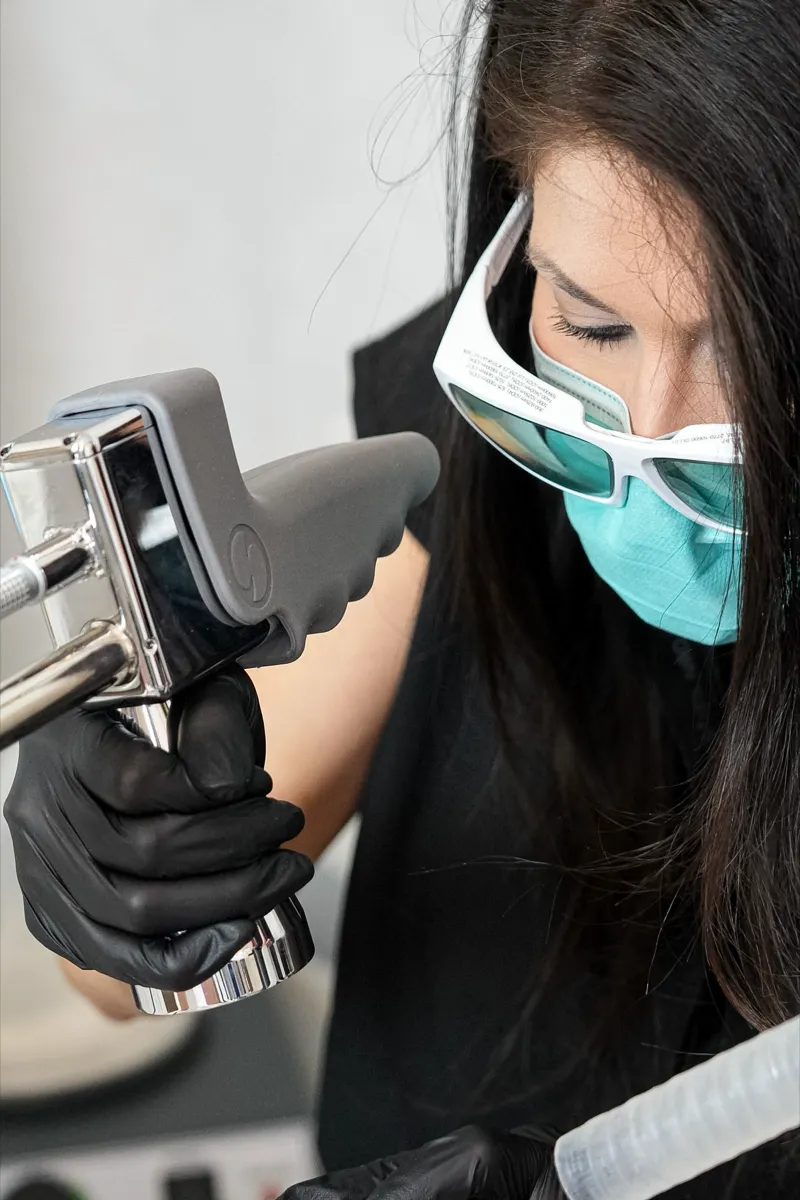
Contour TRL is a fully ablative erbium resurfacing laser. It removes damaged layers of skin with extraordinary precision, allowing healthier skin to regenerate in their place. The goal is not a temporary glow. It is structural improvement. At Olympia Aesthetics & Wellness, TRL is used thoughtfully and never generically, selected when the skin truly calls for deeper correction.
Why “tunable” makes the difference
TRL stands for Tunable Resurfacing Laser, and the word tunable matters. Unlike devices that operate within fixed treatment patterns, Contour TRL gives precise control over how deeply and how broadly the skin is treated. That control means resurfacing built around your actual skin condition rather than a preset protocol.
Ablation depth is tuned to each area and concern, from lighter correction to deeper structural resurfacing.
Treatment can be broad or concentrated where damage and scarring actually sit.
Delicate zones are handled differently than thicker skin, so correction is intentional, never generic.
What does Contour TRL treat best?
TRL occupies the corrective end of our Sciton platform. It is chosen by patients ready to address concerns that have been present for years. It is commonly used to treat:
- Deep wrinkles & foldsEtched lines and folds that no longer respond to surface treatments or injectables alone.
- Acne & surgical scarsDepressed acne scars and post-surgical texture, remodeled as new collagen forms.
- Advanced sun damageYears of cumulative UV damage and the rough, leathery texture that comes with it.
- Uneven textureSurface irregularity that catches light and makes skin look tired in natural light.
- Perioral & periorbital linesFine, etched lines around the mouth and eyes where skin is thin and detailed.
- Loss of firmnessCrepey, aging skin that responds to deeper collagen stimulation.
For preventative maintenance with minimal downtime, MOXI is usually a better fit. For surface renewal with deeper collagen stimulation, HALO is the middle ground. TRL can also be integrated into a TRIBRID plan for multi-layer customization. Most often performed on the face, perioral and periorbital areas, and neck.
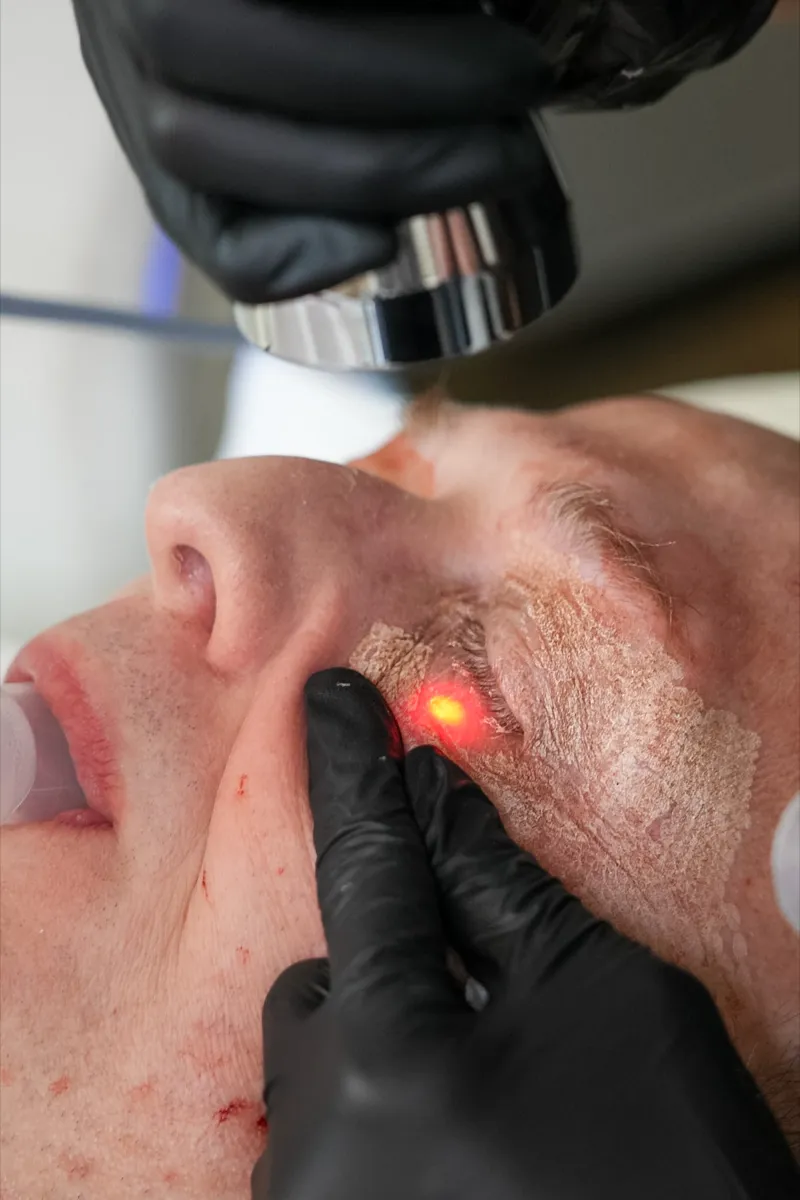
TRL healing, day by day
Deep resurfacing earns its results through a real recovery, and we would rather show it than gloss over it. These photos follow an actual Olympia Aesthetics patient through the days after a Contour TRL treatment, from the first raw days through re-epithelialization.
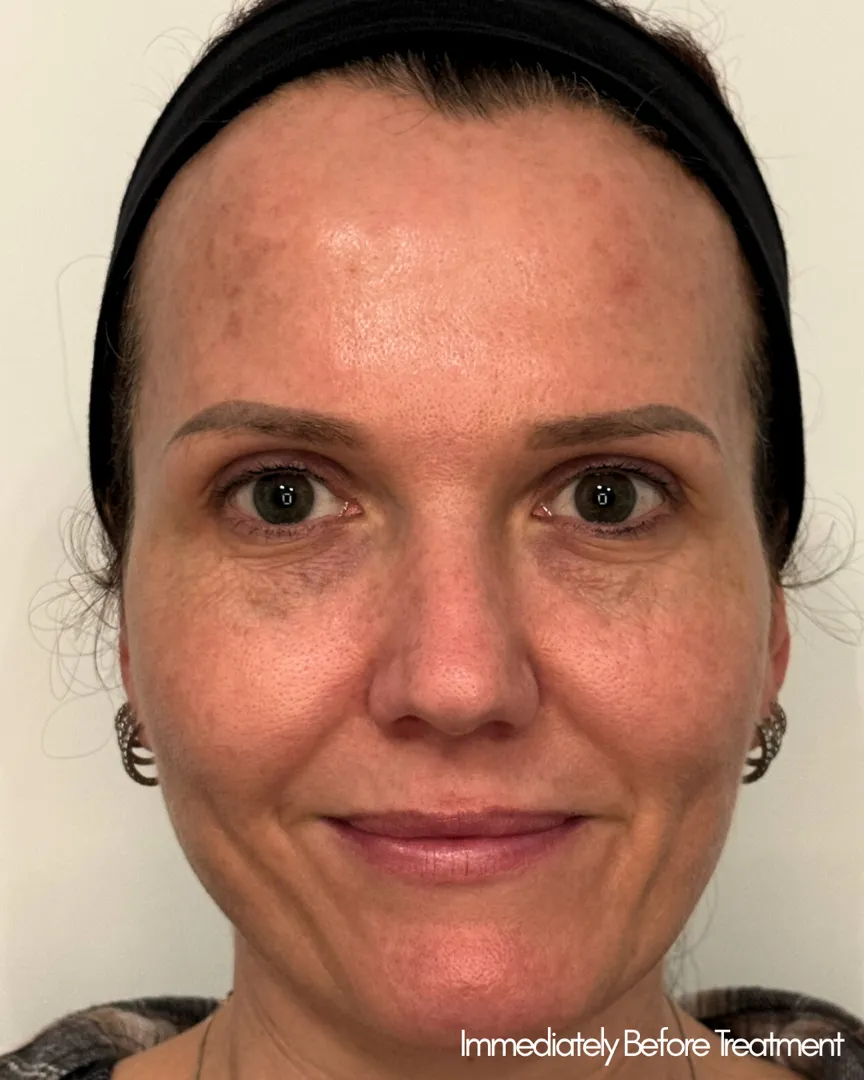
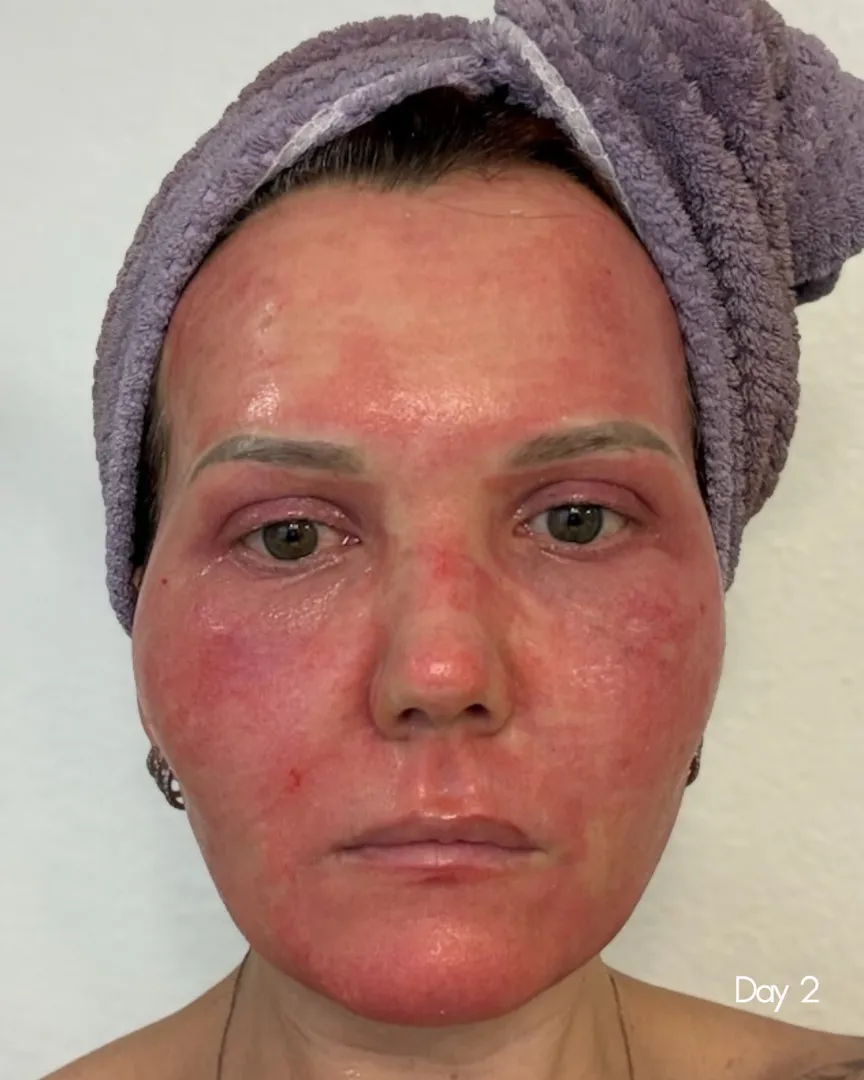
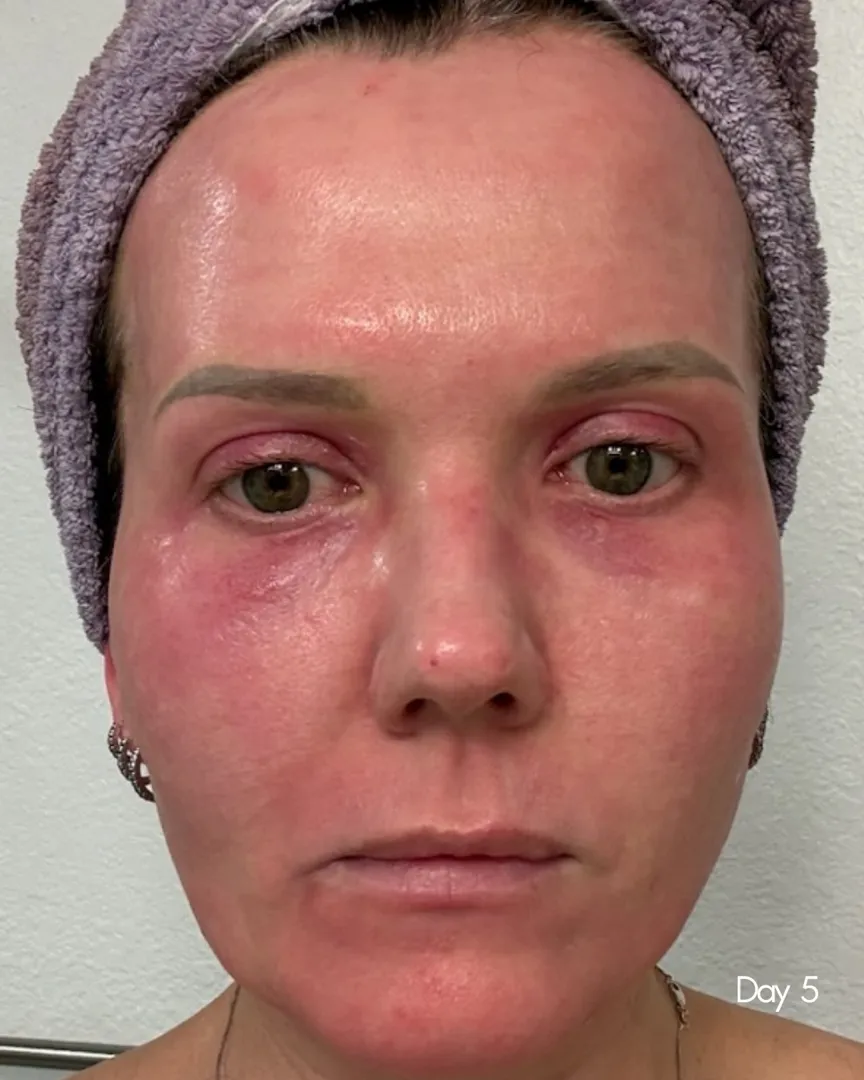
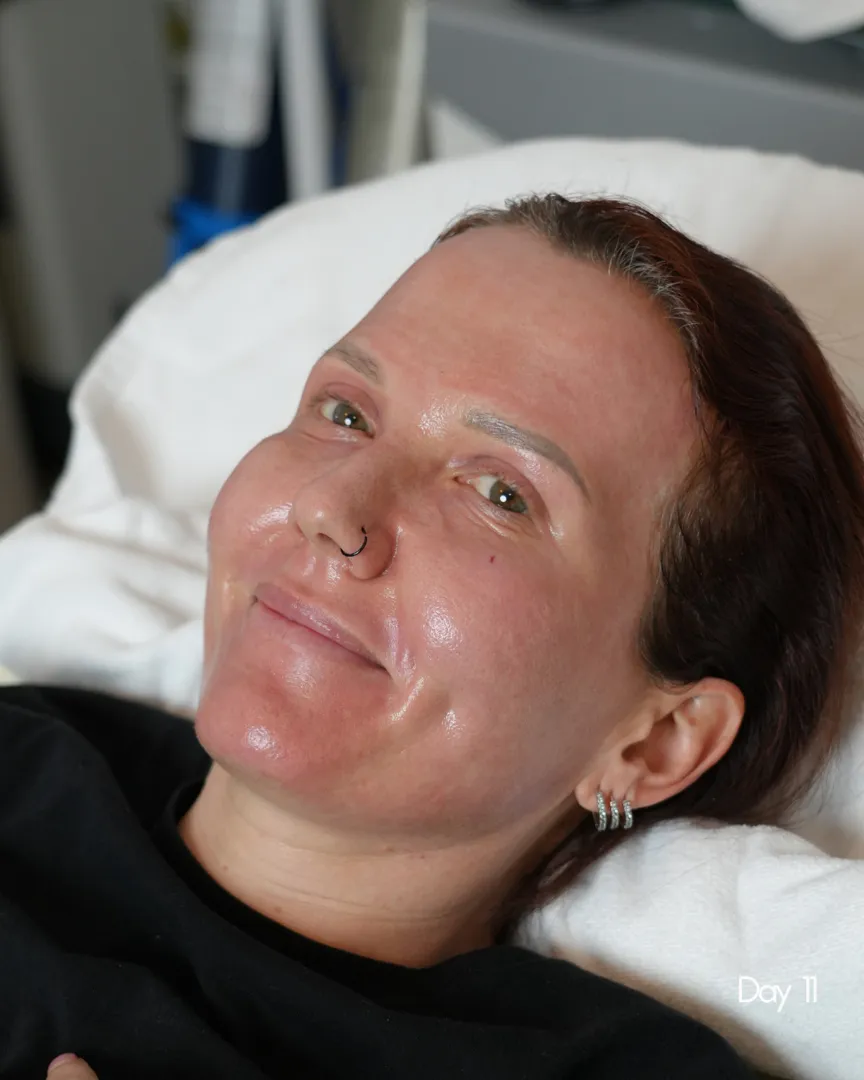
Every plan comes with written aftercare and direct access to our team while you heal. Individual healing timelines vary with depth and skin type.
Contour TRL vs CO2 lasers
Both Contour TRL and CO2 lasers are ablative, meaning they remove damaged skin to trigger renewal and collagen remodeling. The difference is the wavelength, and how the skin absorbs it.
Contour TRL uses a 2940 nm erbium wavelength, which is absorbed by water in the skin far more precisely than the 10,600 nm of a traditional CO2 laser. That precision lets TRL remove tissue cleanly with less residual heat spreading into the surrounding skin. Less collateral heat generally means a more controlled treatment, faster healing, and a lower risk of prolonged redness, hyperpigmentation or scarring, particularly when settings are matched carefully to your skin.
Water-targeted ablation with a smaller thermal footprint. More controlled depth, faster healing and lower pigment risk when properly set.
Powerful, but with a larger thermal footprint that often means longer downtime and a higher margin for post-treatment pigment change.
CO2 resurfacing can be very effective, and in the right hands it has its place. For many patients seeking deep correction with a more predictable recovery, erbium-based TRL offers a gentler path to similar structural improvement. No laser is right for everyone, though. The safest result comes from matching the device, depth and settings to your skin type and history, which is exactly what your consultation is for.