What Botox actually does
Botox is a purified form of botulinum toxin type A. Injected in tiny amounts into specific muscles, it briefly softens the muscle contractions that fold the skin into lines every time you frown, squint or raise your brows. The lines you have at rest soften, and new ones are kept from etching deeper.
It treats dynamic wrinkles, the ones that come from movement. Deeper static creases and lost volume are a job for filler, which is why a real plan often uses a light touch of each rather than a heavy dose of one. The art is in where and how much, so your forehead still moves and your smile still reaches your eyes.
The areas we treat most
Most patients start with the upper face. From there, small refinements around the mouth, jaw and neck can do a surprising amount.
Forehead lines, the frown "11s" between the brows, and crow's feet around the eyes. A subtle brow lift is possible here too.
A lip flip for a softer upper lip, a gummy-smile adjustment, bunny lines on the nose, and dimpling on the chin.
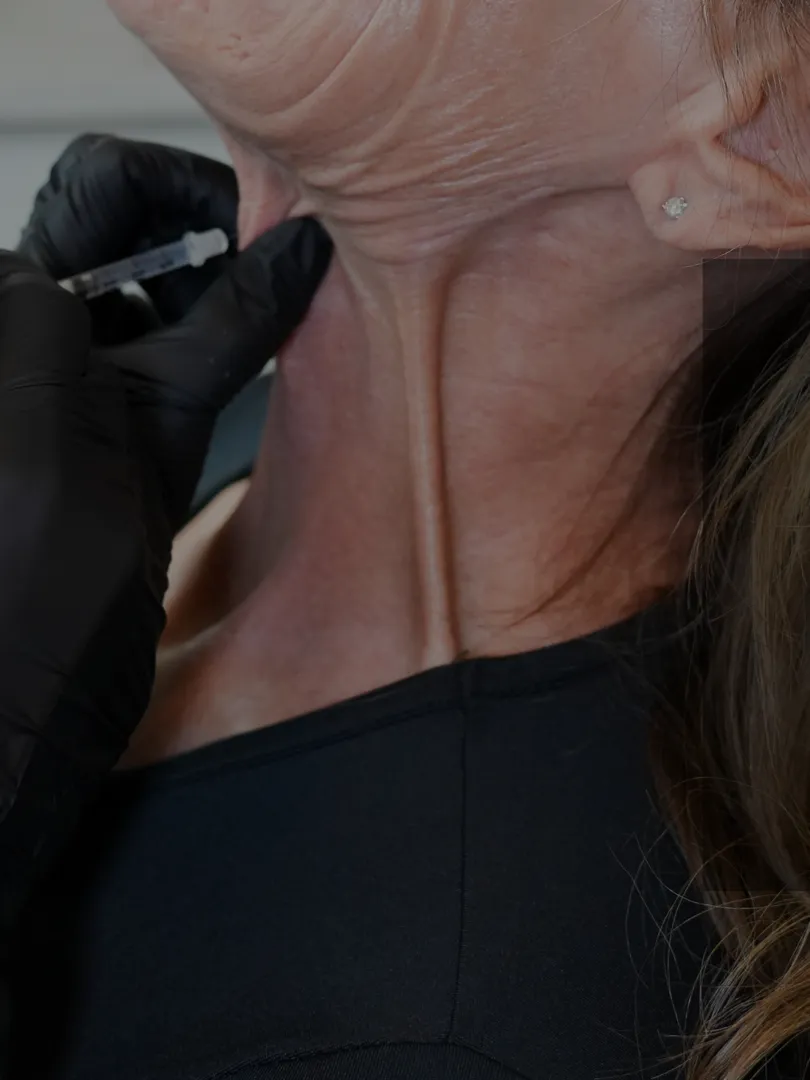
Masseter treatment to slim a strong jawline and ease clenching, plus neck bands for a smoother profile.

What Botox treats best
Results range from a quiet refresh to a clear, visible smoothing, depending on the plan you and Olympia build together. Botox is commonly used for:
- Forehead linesHorizontal lines that deepen when you raise your brows, softened while keeping natural movement.
- Frown lines (11s)The vertical creases between the brows that can read as tired or angry at rest.
- Crow's feetFine lines that fan out from the corners of the eyes when you smile or squint.
- Jaw clenching & TMJMasseter treatment that relaxes an overworked jaw muscle, easing clenching and slimming the lower face over time.
- Excess sweatingUnderarm hyperhidrosis that does not respond to clinical antiperspirants.
- Preventative "baby tox"Lighter dosing for younger patients to keep dynamic lines from setting in.