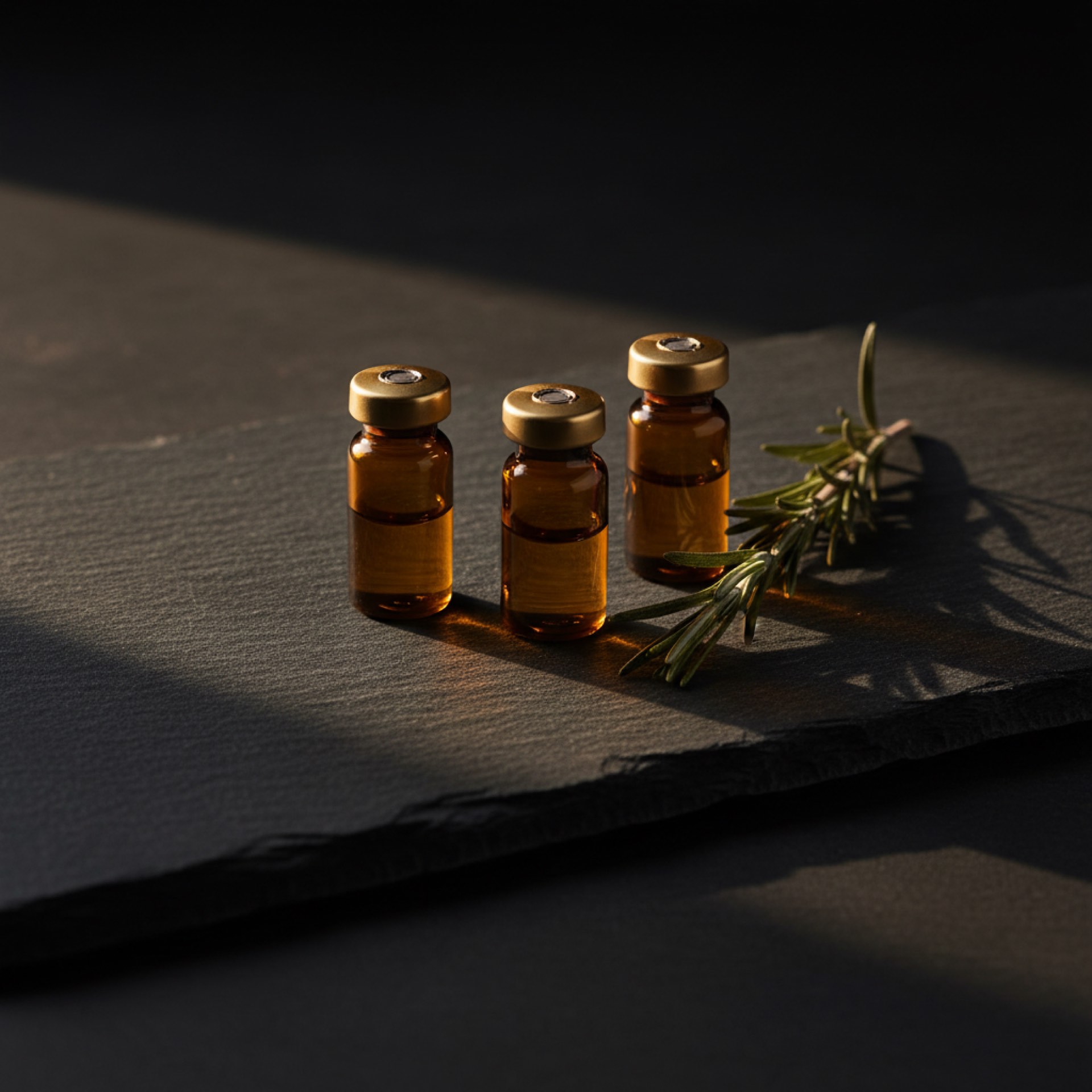
Peptides are targeted biological signals, not supplements. Used correctly and dosed properly, they’re some of the cleanest tools we have for recovery, lean mass, sleep, cognition, and skin quality. Used incorrectly, they’re expensive placebo at best.
Every program below has its own page covering the protocol, the research, and what to expect. Start with your goal. At your consult we build the stack around your labs, not a menu.
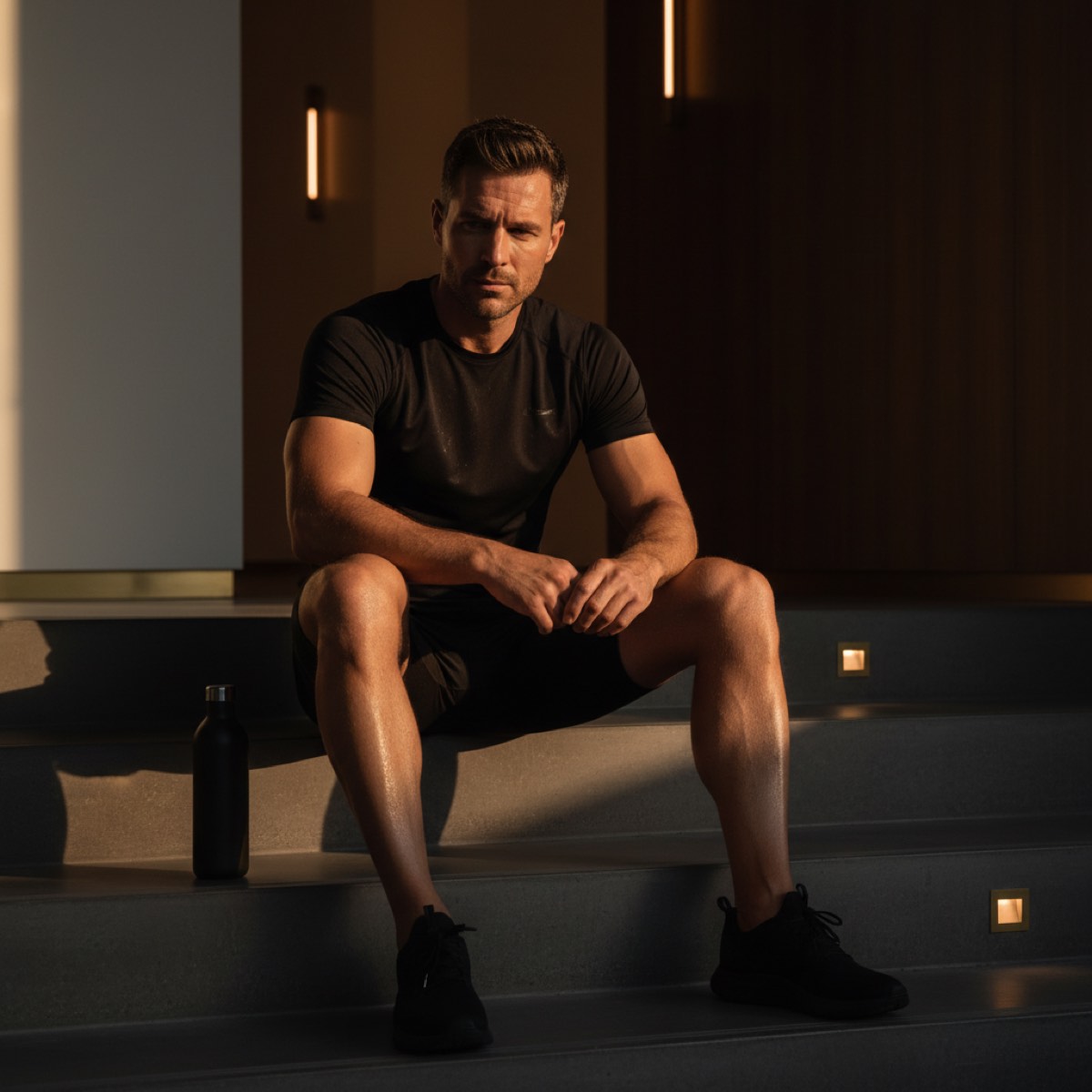
Peptides are short chains of amino acids, the same building blocks as proteins but shorter and more targeted. Your body produces thousands of them. Some regulate growth, some accelerate healing, some modulate immune function, and some act on metabolism or mood.
Therapeutic peptide use takes advantage of this by supplying a specific peptide to drive a specific response. BPC-157 to accelerate tissue repair. CJC-1295 with ipamorelin to stimulate your own growth hormone pulse. GHK-Cu for skin and hair. TB-500 for recovery from overuse injuries. PT-141 for sexual function. Each one does a specific job.
Because peptides act precisely, they can be stacked in thoughtful combinations. That’s the difference between a real peptide protocol and a random bottle shipped by a clinic that never ran your labs. We build the stack to the goal, not the other way around.
If you’re also considering hormone optimization, see our TRT program overview. For BPC-157 specifically, we have a detailed page at BPC-157 peptide therapy.
Labs, goals, stack design, adjustment. Not a catalog.
We review your goals (recovery, longevity, performance, aesthetic) and draw relevant labs (IGF-1, CBC, inflammatory markers, hormone panel depending on the stack).
Oliver builds a protocol from peptides sourced through a licensed US compounding pharmacy or a regulated peptide manufacturer and distributor. Every batch ships with a certificate of analysis. We give you the dose, timing, and duration, not a vague “take as needed.”
Most peptide stacks run 8 to 12 weeks followed by a reassessment. We retest labs, review results against goals, and adjust the next cycle or move to a different protocol.
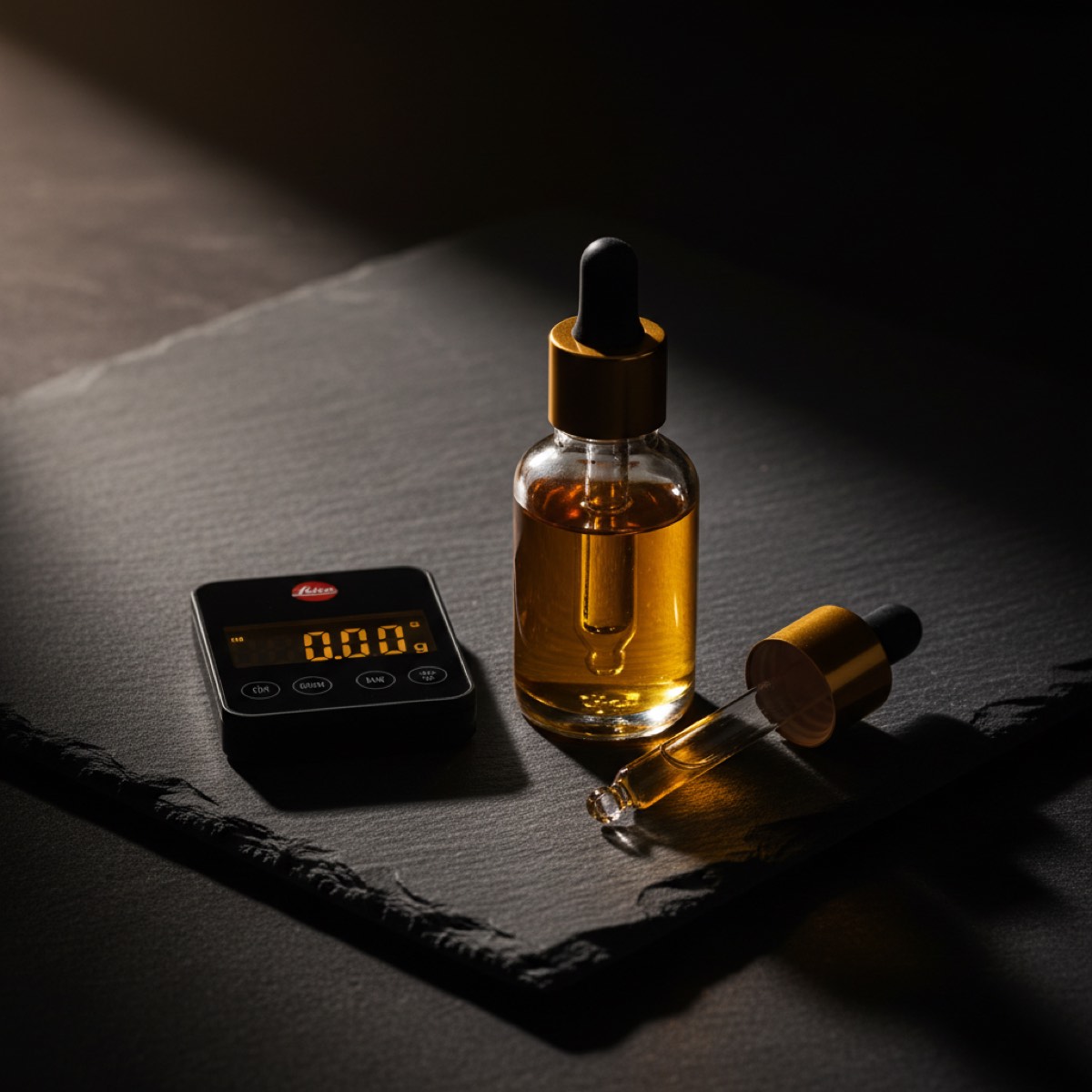
BPC-157 and TB-500. Recovery, soft-tissue healing, gut repair. Our most-requested pair, often stacked after an injury or for chronic overuse. See the dedicated BPC-157 page for the full protocol and expectations.
CJC-1295, ipamorelin, and tesamorelin. Growth-hormone secretagogues and a GHRH analog. Stimulate your own pulsatile GH release rather than supplying GH directly. Common for sleep quality, lean body composition, visceral fat reduction, and recovery in adults 35+.
GHK-Cu. Copper peptide. Used topically and injectably for skin quality and hair. Not masculine-only but effective across the board.
PT-141 (bremelanotide). A melanocortin receptor agonist with effects on sexual response that are mechanistically different from PDE5 inhibitors (sildenafil, tadalafil). Useful for men who haven’t responded well to the standard options.
Selank, Semax. Neuropeptides with anxiolytic and cognitive effects. Used judiciously for patients who want focused cognitive support without stimulants.
Every stack gets a rationale, a protocol, and a check-in. We don’t sell a menu.
Each peptide below is sourced from a licensed US compounding pharmacy or a regulated peptide manufacturer and distributor, with a certificate of analysis on every batch, and prescribed only after labs and a physician consultation. None of these peptides are FDA-approved for the uses described here. Research is ongoing, and we do not promise specific outcomes.
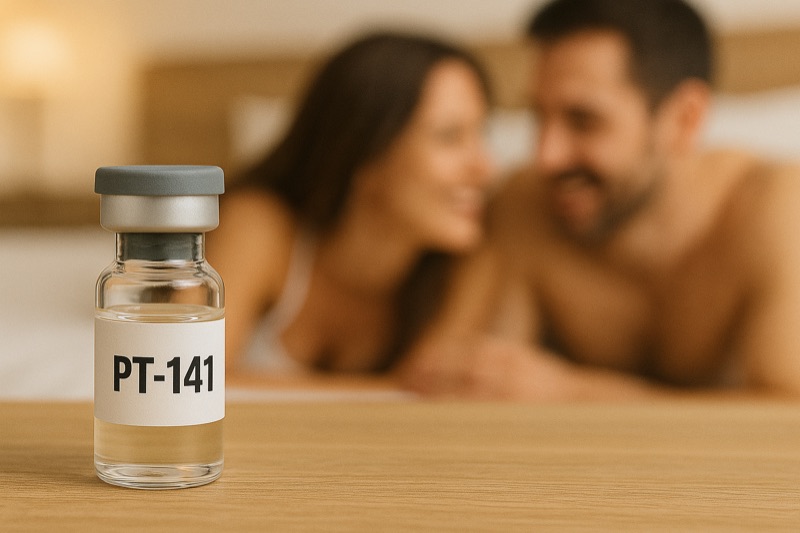
A peptide that acts on melanocortin receptors in the brain. The FDA-approved version (Vyleesi) treats premenopausal HSDD; patients also use it as needed for desire and arousal support.
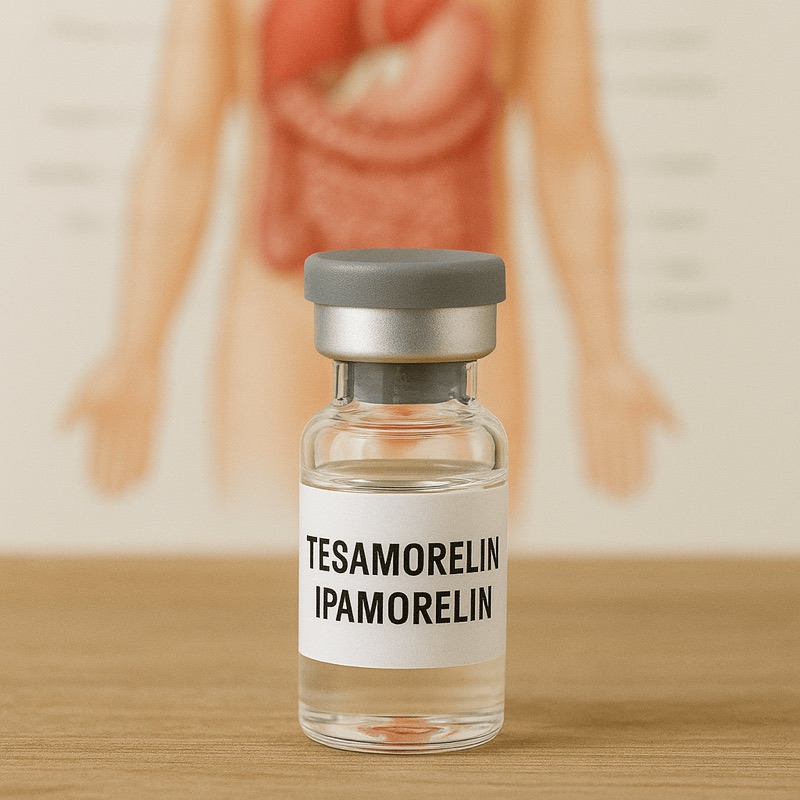
A growth-hormone-releasing hormone analog paired with a growth-hormone secretagogue. Studied for visceral fat, body composition, and sleep quality.
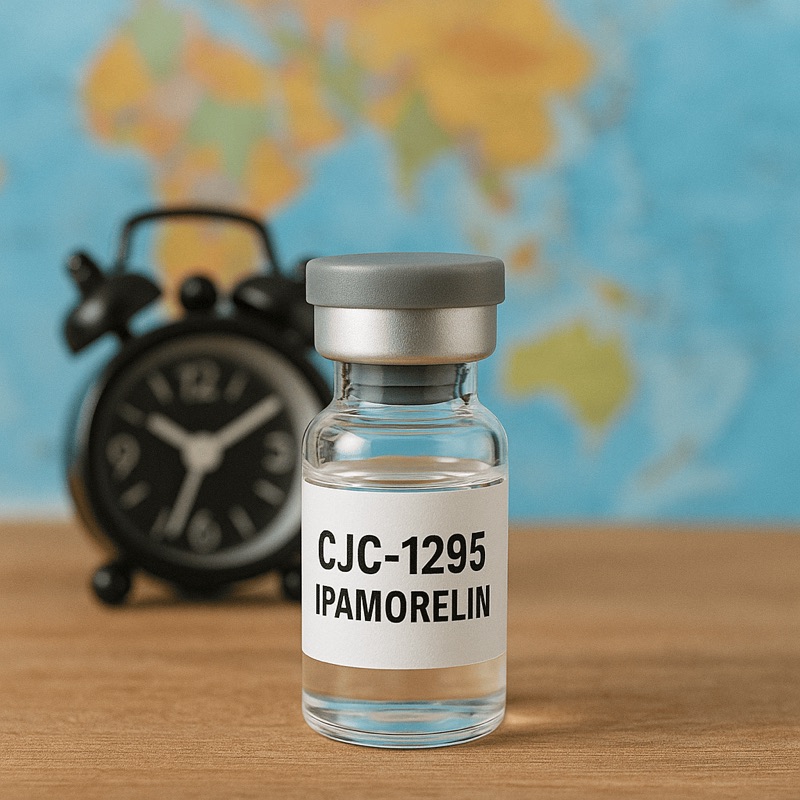
Stimulates your body’s own pulsatile growth hormone release. Research has focused on deeper sleep, lean mass, and recovery, particularly in adults 35 and older.
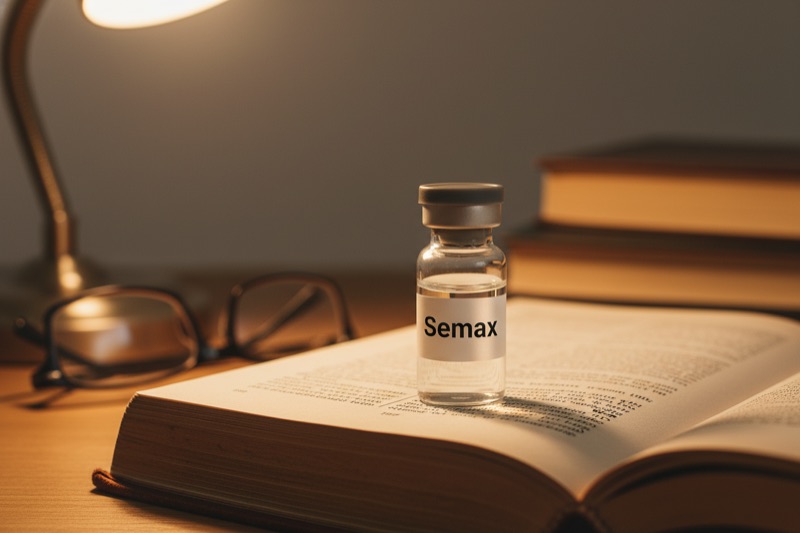
A short synthetic analog of an adrenocorticotropic hormone fragment, studied in Russian clinical literature for attention, stress resilience, and cognitive performance.
A heptapeptide studied for anxiolytic and cognitive effects without the sedation or dependence associated with benzodiazepines.
Nicotinamide adenine dinucleotide. Not a peptide technically, but grouped here because we dose it alongside peptide protocols. Research has focused on mitochondrial function, recovery, and aging biology.
A mitochondrial-derived peptide studied for its role in cellular energy production, insulin sensitivity, and exercise capacity.
A copper tripeptide used topically and injectably. Research has focused on collagen support, wound healing, hair follicle activity, and skin elasticity across skin tones.
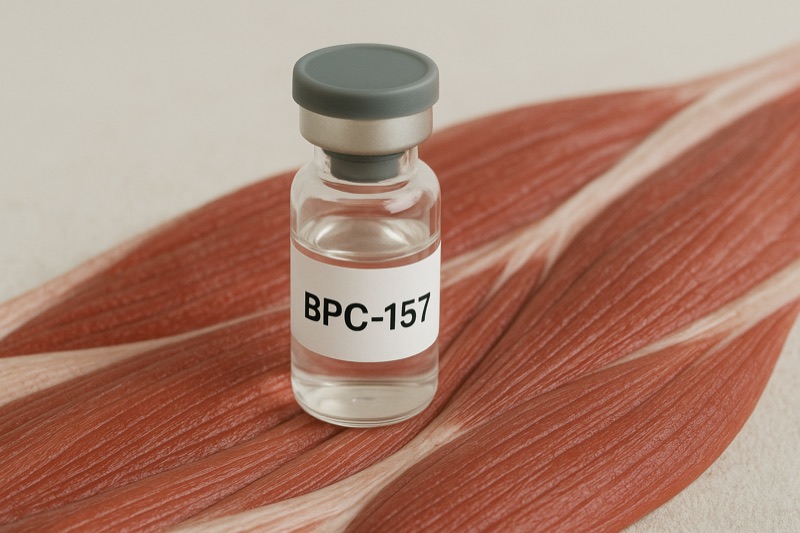
Body protection compound 157. Studied extensively in animal models for soft-tissue healing, tendon and ligament injury, and gastrointestinal mucosal protection.
A combination blend combining copper tripeptide with BPC-157 and TB-500. Typically chosen when a patient wants both skin-quality support and broader tissue-repair activity in a single protocol.
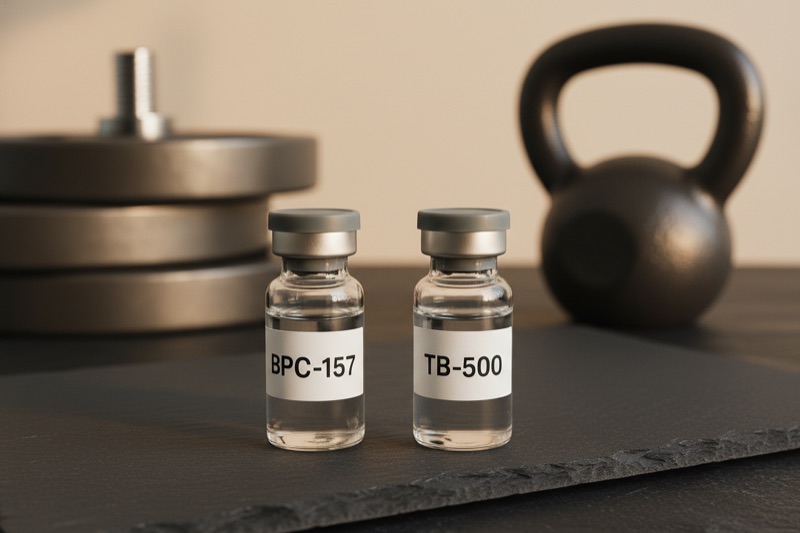
Our most-requested recovery stack, combining BPC-157 with thymosin beta-4. Commonly studied together for soft-tissue repair and recovery from overuse injury.
Peptide therapy sits at different levels of evidence depending on the molecule. Some peptides (like BPC-157 and CJC-1295/ipamorelin) have dozens of peer-reviewed preclinical studies and growing clinical data. Others are earlier in the evidence cycle. We’re honest with patients about where each one sits.
BPC-157 has extensive animal literature documenting accelerated soft-tissue healing, tendon and ligament repair, and gastrointestinal mucosal protection. Human clinical data is lighter but growing, and clinical use in sports medicine has been widespread. CJC-1295 with ipamorelin has been studied for its growth hormone secretagogue effect in adults with adult-onset GH deficiency and for body composition in aging adults.
For PT-141, the evidence is strongest: it’s FDA-approved under the brand name Vyleesi for hypoactive sexual desire disorder in women, and it has meaningful off-label use in men for erectile and libido issues that don’t respond to PDE5 inhibitors.
We source peptides from two channels: 503A or 503B licensed US compounding pharmacies that follow USP standards, and regulated peptide manufacturers and distributors that supply pharmaceutical-grade material. Every peptide we use, from either channel, comes with a certificate of analysis documenting purity and potency. If we cannot verify a peptide was lab-tested, we don’t prescribe it.
Week 1–2. Subtle shifts. With CJC/ipamorelin, sleep depth is often the first change. With BPC-157, inflammation in the injured area starts to quiet. With PT-141, effects are acute (within hours of dosing) rather than cumulative.
Week 3–6. Primary changes appear. Recovery faster after training. Tendon and joint discomfort dropping. Body composition trending. This is where most patients are convinced the protocol is working.
Week 7–10. Compounded results. Strength up, sleep consistently better, skin and hair quality shifting on the copper-peptide stacks. Labs rechecked at week 8 for IGF-1 (on GH secretagogues) and any stack-specific markers.
Week 11–12 and reset. Most cycles taper or end at week 12. We reassess whether to run again, switch protocols, or step down to maintenance. Continuous year-round use is rarely the right answer.
Peptides are sold by the bottle. You can start with a single vial and scale up if it’s the right fit, or run a full protocol from day one. Pricing is quoted at your consultation and depends on which peptides you’re running, the bottle size, your dosing, and the length of use. A typical 12-week BPC-157/TB-500 program, a growth-hormone secretagogue run, and a PT-141 cycle are all very different price points.
We include physician management in the price, not as an extra. Labs are billed wholesale through a standard US clinical laboratory. CareCredit financing is available. If a peptide you see online is dramatically cheaper than what we quote, it’s almost always either unregulated or the clinic isn’t including the clinical oversight that makes the therapy safe.
Prescription peptides dispensed through a licensed US compounding pharmacy or a regulated peptide manufacturer and distributor on a valid prescription are legal. The market is confused because there’s a large gray area of “research chemicals” sold online without clinical oversight. Everything we prescribe comes through a regulated supply chain with a certificate of analysis on every batch.
The peptides we use have favorable safety profiles when dosed correctly under medical supervision. Risks are real (injection site reactions, effects on endogenous hormone production, impact on glucose control with GH secretagogues), which is why we run labs and follow up.
Anabolic steroids directly supply androgens. Peptides work further upstream, typically by signaling your own body to produce or release something (growth hormone, healing factors, etc.). They’re not chemically related and produce very different effect profiles.
You can, and it’s a minefield. You don’t know the purity, the actual dose, or whether the molecule in the vial matches the label. We’ve seen patients come in with labs that made no sense, traced back to a gray-market vial. We prescribe pharmacy-grade material only.
Most standard drug tests don’t screen for peptides. Professional athletics (NCAA, WADA, pro leagues) have specific peptide panels that do test for growth-hormone secretagogues and certain performance peptides. If you’re a tested athlete, talk to us at the consult before starting anything.
Most are subcutaneous injections using insulin syringes. Some (GHK-Cu, occasional others) are topical. A few (like PT-141) can be nasal. We’ll teach you the technique at your first visit, and most patients become comfortable with it within a week.
It depends entirely on your goal. Recovery and healing → BPC-157/TB-500. Sleep, recovery, body composition → CJC-1295/ipamorelin. Sexual function → PT-141. Skin and hair → GHK-Cu. We pick based on your labs and priorities, not a default.
Yes, and it’s one of the most common combinations we run for men in their 40s and 50s. TRT handles the hormone baseline, peptides address recovery, body composition, and aesthetic outcomes. See our TRT overview for how the two programs interact.
Most protocols run 8 to 12 weeks followed by a reassessment. A subset (PT-141 for example) is used as-needed rather than on a cycle. We’ll map the timeline at your consult.
Dr. Oliver Morris personally. You meet him at the consult and see him for every follow-up. Read his background on the Dr. Oliver Morris bio page.
One visit, a focused lab panel, and a protocol built for your goal. No catalog peptides, no subscription you forgot to cancel.